AI compliance, inventoried

Know which AI rules apply — and prove it.

Regmap takes an inventory of the AI systems your company deploys and, for each one, answers the three questions a regulator, a customer, or your own counsel will ask.

10
regimes, drafted from primary sources
35
rules — every one cited and dated
43
obligations tracked to artifacts
0
conclusions without a cited rule row
The three questions

Which regimes. What obligations. What's missing.

Q-01 / Scope

Which regimes apply?

A short intake describes each system. A deterministic engine maps it to the AI laws that reach it — by jurisdiction, purpose, and how the system is used.

Q-02 / Duties

What obligations follow?

Each applicable regime unfolds into the concrete duties it imposes — notices, assessments, disclosures, human review — with the effective dates attached.

Q-03 / Gaps

What artifacts are missing?

Regmap compares those duties to what you already have and drafts the gaps: AI-use policy, risk assessment, inventory register, disclosure notices, vendor questionnaire.

Method

Describe. Evaluate. Hand over.

Four minutes of plain-language intake per system. The engine and the ledger do the rest.

01 / Describe

A four-minute intake

Describe a system in plain language. The model only suggests intake answers — you confirm every one. It never decides what the law is.

02 / Evaluate

A deterministic engine

Your confirmed answers run against versioned rule tables. Ambiguity returns needs analysis — never a confident guess.

03 / Hand over

A snapshot you can defend

A print-ready compliance snapshot, an obligation tracker, and draft artifacts — each citing the rule it came from.

The atlas

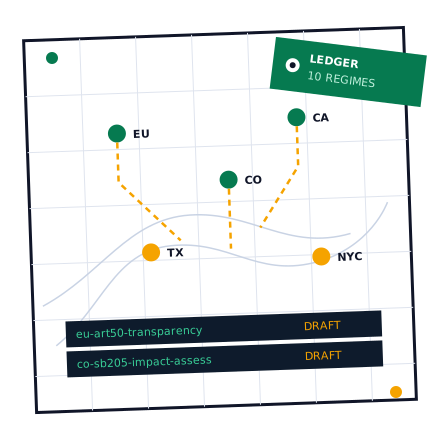
Ten regimes in the first release. Each one cited and dated.

REG-01 · EU

EU AI Act

Reg. (EU) 2024/1689, as amended

REG-02 · US-CO

Colorado AI Act

SB 24-205

REG-03 · US-TX

Texas TRAIGA

H.B. 149

REG-04 · US-IL

AI Video Interview Act

820 ILCS 42

REG-05 · US-IL

AI in employment

HB 3773 · 775 ILCS 5

REG-06 · US-NYC

Local Law 144

Automated employment decision tools

REG-07–10 · US-CA · the 2026 cohort

California, four regimes deep

AB 2013 training-data transparency · SB 942 AI Transparency Act · SB 243 companion chatbots · AB 3030 health-care disclaimers — different operative dates, kept distinct.

Read what each one requires →

The line we hold

Every conclusion traces to a cited rule row.

The engine that decides what applies reads only versioned, dated rule tables drawn from the primary sources — the statute, the regulation, the section. The AI assists the intake and nothing else; it is structurally unable to author a legal conclusion. If a rule doesn't cover your case, Regmap says so rather than inventing an answer.

Rules are data, not memory

Change the law and you change a reviewed, dated, diffable data file — not a prompt.

Ambiguity answered honestly

Three-valued logic: true, false, unknown. A statute that doesn't resolve your case returns needs analysis, naming the open question.

Draft until counsel signs

Every rule ships marked draft, and every result wears that mark until a qualified attorney verifies the rule against its source.

An honest disclaimer. Regmap is in invite-only beta, and its rule corpus is currently draft, pending review by qualified counsel. It is a tool for organizing compliance work — it is not legal advice and is not a substitute for a lawyer. Every result is marked draft until an attorney has verified the underlying rule.

Private beta

Put your AI inventory on the record.

Access is by invitation while the rules are under counsel review. Tell us what you're deploying and we'll set you up.